Laboratory of Agricultural Hydraulics
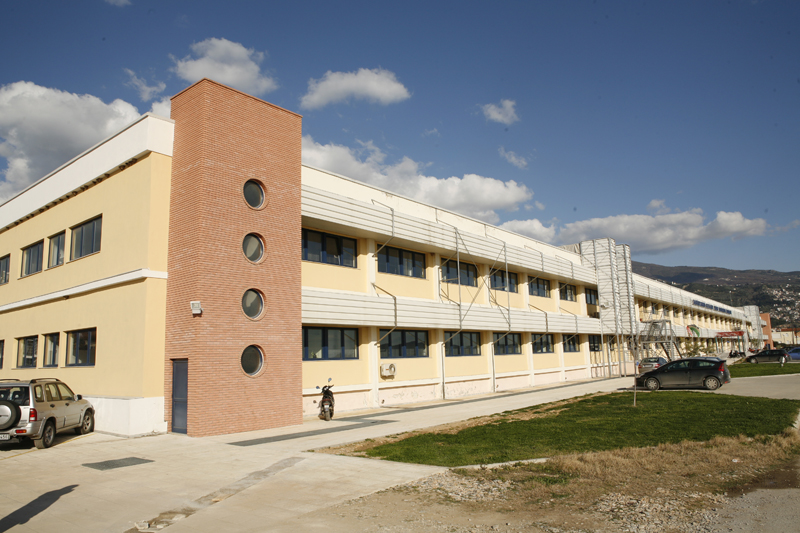
Laboratory of Agricultural Hydraulics
Director: Nikolaos Katsoulas, Professor
Laboratory Mission
Established laboratory: It covers the academic teaching and research needs in the field of Agricultural Hydraulics, as described in Government Gazette (FEK) No. 38, dated 22/02/1995, Issue A.
Members:
Dr Anastasia Angelaki, Assistant Professor of Agricultural Hysraulics
Courses
Undergraduate courses
- Hydraulics (AGR_U_176)
- Irrigation Ι (AGR_U_214)
Research
In the laboratory (indicatively):
- Modeling water movement in the rhizosphere.
- Investigation and design of the soil characteristic curve.
- Investigation of the non 1-1 relationship between suction and moisture, along with the hysteresis phenomenon.
- Investigation of hydraulic conductivity in the unsaturated and saturated zone.
- Investigation of soil hydraulic conductivity under different flow rates.
- Comparative evaluation of infiltration prediction models in unsaturated soil, simulation.
- Investigation of the spatiotemporal variation of soil moisture and tension.
- Determination of hydraulic parameters using graphical and numerical analysis.
- Impact of hydraulic properties on irrigation scheduling.
- Quality and toxicity of irrigation water, potential soil degradation and potential aquifer pollution.
- Investigation of solute leaching in different soil textures and research on the potential contamination of groundwater.
In the field (indicatively):
- Rational management of irrigation water using new technologies (automated smart irrigation systems, telemetry, precision irrigation).
- Estimation of crop water requirements using ground-based and aerial methods.
- Determination of crop coefficients.
- Climate change effect on the spatiotemporal distribution of soil moisture.
- Investigation of soil moisture profiles and estimation of incoming water volumes.
- Investigation of cumulative infiltration in the field, modeling, simulation curves.
- Effect of soil amendments on hydraulic properties and irrigation water management.
- Comparative evaluation of the efficiency of different irrigation systems.
- Impact of climate change on water management.
- Reuse of greywater for irrigation.
- Crop resilience to water stress; deficit irrigation and water conservation; water use efficiency.
- Study of water discharge and velocity in closed tubes and open canals.
- Spatial variability of saturated hydraulic conductivity and soil moisture.
- Experimental determination of the soil characteristic curve in the field with and without vegetation (bare soil).
- Assessment of the risk of groundwater contamination from surface inputs.
Publications
- Google Scholar: https://scholar.google.gr/citations?user=2pJrOCYAAAAJ&hl=en
- ORCID: https://orcid.org/0000-0003-2860-0895
- SCOPUS: https://www.scopus.com/authid/detail.uri?authorId=36825249500
- Research Gate: https://www.researchgate.net/profile/Anastasia-Angelaki?ev=hdr_xprf
- SciProfiles: https://sciprofiles.com/profile/981350
Multimedia